Evening at Zambezi River, Victoria Falls, Zimbabwe, May 2015
and so does everything around... the situation, the people, the perspective, the needs.... and we too change.... the wise and courageous seek change.. because only change is constant!
Showing posts with label people. Show all posts

Monday, February 9, 2026

246. A Visit to “BoShanKo”: Part 1

 (ही पोस्ट मराठीत इथं वाचता येईल.) 

You are probably reading the word “BoShanKo” in the title for the first time.

You might also be wondering who this “BoShanKo” is—a person, perhaps?

But “BoShanKo” is not the name of any person. In fact, I myself had never heard or read this word before. I have coined it today. It is a word formed by taking the first two letters from the first and third place and four letters from the second place. Sounds complicated? 

Bolpur–Shantiniketan–Kolkata: I have just returned from these places. These are notes from that journey. Notes of “BoShanKo.” Or rather, the “BoShanKo” that I saw and experienced. (Note. Shantiniketan is in fact Santiniketan, S is pronounced as Sh here. But for non-Bengali readers, I am keeping Sh and not using just S.) 

This series will have four articles. The first article is about experiences of an earthen house and food in Bolpur. The second article is about Shantiniketan. The third article is about wandering through old Kolkata. The fourth and final article will have my observations from a visit to Dakshineswar and a drama that I watched. 


Towards Kolkata

I travelled from Pune to Kolkata by the Azad Hind Express. A journey expected to take thirty-four hours stretched to forty-two hours because the train was delayed. Such a journey is not just about kilometres; it is also about getting to know co-passengers. On such long journeys, one inevitably encounters both pleasant and unpleasant experiences with fellow travellers.

Somewhere around Manmad or Bhusawal, a large group boarded our coach late at night. In the darkness, berth numbers are not easy to see, so a bit of confusion was understandable. Also, being mindful that others are asleep is not exactly a common habit. But even after half an hour, their noise did not subside. When I asked them to lower their voices, they got angry, and their volume only increased.

The next day, while chatting with a few of them, I learnt that they were a spiritual group travelling to Gangasagar. There were forty people in the group, including twenty-five men. Some of these men had been allotted lower berths. Which meant that the previous night, they had been quarrelling with other male passengers to get lower berths for the women in their group—an act of sheer selfishness. They could easily have arranged lower berths for the women within their own group. But expecting benefits from others without giving up one’s own comfort seems to be a common habit of our society (or at least of its majority).

There was another man who spread his bedding and went to sleep as soon as the train left Pune. He would wake up occasionally to talk on the phone or eat something. But till we got down on the morning of the third day, he seemed to be sleeping. I once asked him if he was unwell. He said he was just resting.

A middle-aged woman boarded at Nagpur. She too was travelling to Kolkata. Her brother was unwell, and she seemed a bit distracted. When we offered her something to eat while we were eating, we ended up talking a little more. Her next question was—where are you headed?

That was a difficult question. Because I was going to stay at the home of my niece Anujna’s friends, people I had not met before. Staying or eating at the homes of people I do not know is quite normal for me. But this often does not fit into other people’s definitions of what is acceptable. So I vaguely replied, “I’m going to see Shantiniketan,” and changed the topic.

There was also a young co-passenger. He was a wholesale garment trader. Because of the delay, he was sorting out disruptions to his onward flight travel. At one point, he received a call from home. I could hear the entire conversation clearly. His daughter, who was in third grade, had to give a speech at school on the occasion of Republic Day, and he was discussing this with his wife. When he realised that the girl wouldn’t be able to read the speech and would have to memorise it, he paused to think. Then he said to his wife, “Don’t worry. Just tell her to remember three words—India, the Constitution, and Dr. Babasaheb Ambedkar. Even if she says just these three words, it will be good.” I felt a deep respect for him. We spoke a little more after that.

On such journeys, a vast canvas of people, perspectives, and realities keeps unfolding.

Bolpur

When the train reached Howrah Junction, Debahuti had come to receive us. After having something to eat, we set off towards Bolpur. As a “senior citizen,” I was given the front seat in the car, and it remained reserved for me throughout the journey 😊

The distance from Kolkata to Bolpur is about 150 kilometres. Within the first ten or fifteen minutes, it became clear that people here are used to honking a lot and driving fast.

The Hihgway outside Kolkata city

For those of us from outside West Bengal, Shantiniketan is a familiar name, but Bolpur is not. One could say that Bolpur’s primary identity is that Shantiniketan is located within it. But Bolpur has a history and an identity that predate Shantiniketan.

Paddy fields in Bolpur

Bolpur is in the Birbhum district. To be honest, I did not see Bolpur the way tourists usually do. What I saw while travelling to and from Shantiniketan and on the way to the railway station felt pleasant. Paddy transplantation was in progress in the fields (rice is cultivated three times a year here, and for the third crop, a lot of groundwater is extracted). Women and men were working in almost equal numbers. The red soil was visible. The roads are narrow, but there are not too many vehicles. Many women and men were seen cycling. It can still be called a “city of bicycles.” There were quite a few hotels and homestays, which suggests that tourists arrive here in large numbers.

The Earthen House

By the time we reached Bolpur, it was dark. But the moment we entered the house from outside, the cold disappeared and it felt instantly warm. I had arrived at Anasua’s home—a two-storeyed house made of earth. The architect who built this earthen house is Anujna. Another architect, Pratiksha, assisted her.

Anasua’s house is not just a second home meant for holidays; it is her primary home. She lives here permanently. Building an earthen house and living in it permanently in 2024–25 is not about going backward, but about looking ahead. Against the backdrop of climate change, rising temperatures, unpredictable monsoons, and excessive use of electricity, an earthen house is a meaningful response. Earth keeps the house cool in summer, warm in winter, and reconnects humans with nature. Instead of the noise of air-conditioners, fans, and heaters, one senses the quiet breathing of the walls. Living in such a house was a deeply restful experience. And because the house was built by Anujna, it felt even closer to me.

Anasua's house as seen from a distance

An earthen house is not only environmentally friendly; it is also a social and cultural statement. A house built with local soil, local artisans, and local knowledge creates employment in the village. It keeps alive traditions of skill and craftsmanship. An earthen house challenges conventional definitions of prestige and prosperity. It tells us that a relationship with nature itself is prosperity. Standing amid concrete jungles, such a house reminds us that we are not here to rule over nature, but to live alongside it.

Ducks at leisure

Anasua’s house is spacious and airy. Gentle winds flow around it, accompanied by the sounds of birds. The sky and birds are easily visible from the windows. The easy movement of dogs, chickens, and ducks in and around the house was delightful. 

Siesta PC: A friend
There is a pond in the courtyard.

The house as seen from the courtyard waith a traditional paddy grannary on the side.

Watching the ducks walk in a line and dive one after another into the pond was a joy. There is a vegetable garden. There is a paddy field. And one more thing—the house is full of books. One can sit anywhere comfortably, chat if one feels like it, or read quietly, sipping black coffee or black tea while listening to Bengali songs. The atmosphere is such that one almost does not feel the need to step outside the house for anything.

After watching one of Anujna’s Facebook Lives, Anasua felt that this was the architect who could build the kind of house she wanted. Two strangers spoke to each other, and the work began. Even after the work was completed, the bond between them remained. Through them, I too became connected. This is a living example of the positive impact of technology—and also an example of why we should question the repeated warnings that tell us never to trust strangers.

If you wish to know more about earthen houses, do visit the Matimol Facebook page.

Food

Strictly speaking, I do not belong to the category of food lovers. I always taste local dishes, but I don’t have rigid preferences of wanting some things and rejecting others. If someone asks me which vegetable or sweet I like the most, I can hardly give a clear answer. However, first at Anasua’s home in Bolpur and then at Debahuti’s home in Kolkata, I developed a distinct awareness around food.

We were all on vacation, so there was no hurry. For breakfast and meals, Tunididi would lovingly prepare different dishes every day. No meal ever began in haste. In the Bengali tradition, meals are eaten in a particular sequence. Rice is the main food, but only a small portion is served at a time. The meal begins with shukto or some mild (or mildly bitter) vegetable. The first portion of rice is finished with that. Then more rice is taken, accompanied by dal (masoor or moong). Next come vegetables like aloo posto and lau ghonto. Then fish—different kinds at every meal. Initially, I enthusiastically asked for names, but gradually gave up worrying about them. After that came chicken or mutton. Potatoes are a must in meals, but I noticed that for each vegetable, the potatoes were cut differently.

There was a procession of dishes, but no chaos. I used to think Bengali food was all about fish, but that isn’t true. There is immense variety even in vegetarian dishes. Each flavour has its own place, its own time. Eating felt like a journey—not a direct leap to the main dish, but a gradual progression. After eating, one felt full, but the head did not feel heavy—that is the strength of this sequence.

The meal always ended on a sweet and gentle note—payesh, chhena sandesh, rosogolla, or sometimes mishti doi.

Pati-Shapta stuffed with jaggery and coconut filling

A dessert that softly bids farewell to all the flavours eaten before. All the sweets were made with 'nolen gur'. 'Nolen gur' is the special marker of a Bengali winter. This jaggery is made from sap collected at dawn from date palm trees and is available only for a few months. When the sap is slowly reduced in the cold air, it loses the sharp sweetness of sugar and develops a smoky, soft, slightly earthy flavour. That is why nolen gur is not just sweetness, but a sign of the season. Its unavailability throughout the year is what makes it special. The use of jaggery and coconut enhanced the flavours of the dishes. During those eight or ten days, I strongly felt that in Bengali food culture, eating is neither a ritual sacrifice nor mere sustenance—it is a calm, unhurried journey to be savoured.

While living leisurely in the earthen house, we had of course not forgotten Shantiniketan. Over the next three days, we wandered through the Shantiniketan–Visva-Bharati campus for different reasons. Let us learn more about that in the next article.

Tuesday, February 2, 2021

237. To Burma: With Love


It is now almost 36 hours since the Tatmadaw (Myanmar Army) took over Myanmar by detaining legally elected party leaders. It has been a hard day for me. I can just imagine how hard it would be to the people of Burma. Burmese friends are aware that they will be cut off from the world at any moment. I do not know how to reach out to them if this happens. I do not know how to support them. I feel devastated. But I also feel determined to stand with the people of Burma.

I had an opportunity to stay in Burma for two and half years. I had many conversations with Burmese citizens – across political affiliations, ethnicities, gender, class, education, and age. With all hope and positivity, the conversation always ended with the statement: “We don’t know how long this (the freedom, the democracy) will last.” So, we all knew this was coming; but we hoped and prayed that this would never become reality. Alas! It has. Once again.

Before arriving in Burma, my knowledge about the country was limited to couple of points. That Rangoon (Yangon) is its capital (which is Nay Pyi Taw for more than a decade); Burma was part of British India (so we have similar colonial experiences) and Vipassana (meditation) is practiced in Burma.

When I landed in Burma in June 2016, Burma was breathing fresh air with the new formed democratic government. I found the country like an innocent child – just waking up from decades of alienation and exploitation to see that the world around has changed so much. Credit to Burmese people, they geared themselves to the new reality – with the hope that they can cover the decades they have missed during the Tatmadaw (Myanmar Military) exploitative rule. There was so much of hope in the air that I still feel it.

It is disheartening to read some of the posts on social media rejoicing detainment of Daw Aung San Suu Kyi. I know some people were disillusioned with her sometimes; I was one of them. But there is a democratic way to remove a political leader /party that you do not find fulfilling your expectations. You vote for another party. The fact is Myanmar voted in 2020 for National League for Democracy (NLD) in the leadership of Daw Aung San Suu Kyi. The Tatmadaw claims of ‘election fraud’ are as imaginary as Trump’s claim in the recent USA elections. To all those, who rejoice the downfall of NLD and ‘The Lady’ (as Daw Aung San Suu Kyi is called by many) do not know what Tatmadaw is capable of. Mind you, I am not using the word capable in good sense! No people on earth should have to face Tatmadaw like rule!

I have heard many stories from my Burmese colleagues about the Tatmadaw atrocities. I have read many books on this topic. In addition to that, I have personal experiences of ‘Big Brother is Watching You’.

When I went to one NGO office in Yangon (and I am not going to mention any names to protect them from the possible harassment), there was a small shop at the entrance of the building. I was searching for the address and confirmed with the shop person. He confirmed and asked me who I was and what was the purpose of my visit. Being new to the country, I assumed it to be a friendly conversation and provided him information. When I entered the office, the NGO workers looked stressed. When I asked what happened, they wanted to know whether I met the shopkeeper. I was amused that it could be a topic of stress. Later they told me that Tatmadaw has this practice of putting their people in disguise and keeping watch on the citizens. This was in 2016 – when NLD had just taken the charge.

Once we (the NGO I was volunteering with) invited media persons to share our plans of our upcoming series of activities. The activities were aimed to generate awareness about violence faced by women and girls. As the meeting started, two plain-clothed men entered and asked, ‘why you have not taken permission from the authorities to hold press conference’. We were confused as there was no press conference. When I looked at the journalists, I realized that some of them had come with their video cameras. But how did these guys come to know about these journalists? Someone must be watching this office and had informed the authorities. The two guys did not reveal their identities to us, they refused to sign the meeting attendance and listened to every word that was spoken in the meeting. This happened in 2017.

In 2018, I moved to Nay Pyi Taw (NPT), the capital of the country. To stay in the city (not in the hotel, but in the house and for long term) we had to take permission of the concerned immigration officer. While signing the documents, the immigration officer told me that every time I move out of NPT, I must inform him in advance. He used to call randomly to check my whereabouts. He was a nice guy and was doing his duty. Once my earlier meeting got delayed and I had to rush to the bus station to catch a bus for Yangon. So, I had not informed the Immigration officer that I was going to Yangon. The bus had just left NPT, and my mobile rang. The Immigration officer at the other end was terribly angry at me for not informing him about my movement. Again, how did he know that I was on this bus? Who informed him? I apologized to him and assured him that now onwards I will never forget to him. I never forgot.

There are many such experiences.

I can understand keeping an eye on foreigners. Protecting your own citizens is an important duty of every government. For that if they watch people like me, it is fine. I have no issues. If I do not like being watched by Myanmar officials, I can always return to my home country. But imagine what would I feel if I were watched in my own country? That is not the idea of Freedom. People across the world need to understand the ‘Constitutional Power’ Tatmadaw has given to itself and how difficult it is to change it.

There are people in Burma who criticized Daw Aung San Suu Kyi and NLD. But every person who criticized; knows in their hearts of hearts that on any given day if they have only two options, they will always choose Daw Aung San Suu Kyi over Tatmadaw. Period.

‘The Lady’ is not perfect. But honestly, tell me one name who is perfect. Each one of us commits mistakes. Learning from mistakes and moving forward is what makes us human beings.

I learned many things from Burma. Two things stand out: Kindness and Forgiveness. Taxi drivers will always donate money if someone asks for it at the signal. They will not complain about their poverty or insult the person asking for money.  They will especially keep some change to distribute. At four in the morning, even when the signal is green, the vehicles will patiently wait for the monks to cross the road. I was once talking to a man, a political activist (in his 40s) who had spent 20 years in jail. I asked him why they do not take the army to the court for violation of human rights. He calmly said, “I did my duty. Things are now fortunately becoming better. At this hour of reconciliation, do you think revenge will help us? In fact, revenge never helps.” I do not think I would be so gracious if I were wronged.

Burma made me realize the value of forgiveness, the value of kindness. Not for others, but for ourselves. The Pagodas, the Pathana (chanting of sutta), the kindness, the friendship, the smiles, the laughter, experiments with Burmese food and language, Burmese longyi …. Living in Burma made me a different person. - a better person - I would like to believe.  It was a kind of healing process for me – healing from the pains of living, healing from the pains rising from my ego. Amidst all the problems a social activist has to live with, Burma introduced me to the inner peace. Burma will always have a special place in my heart.

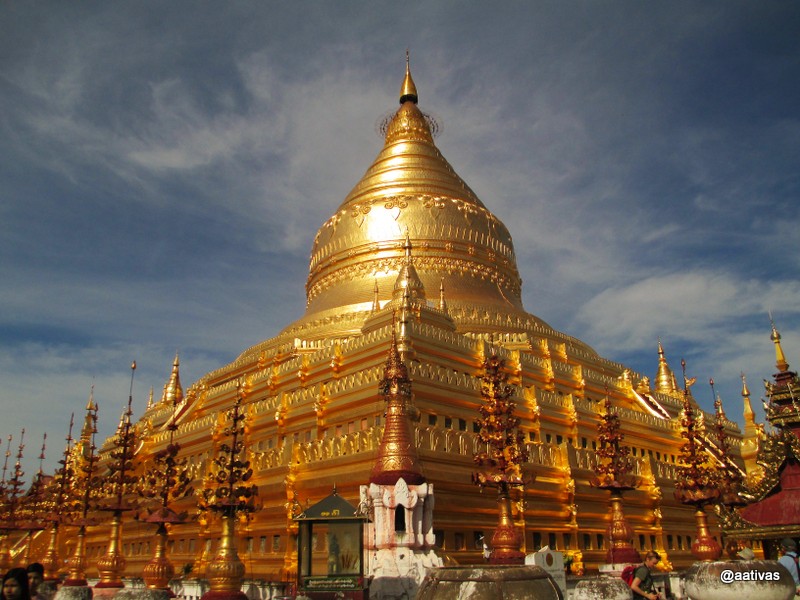
                                                          Shwezigon Pagoda, Bagan

No, Burma is not a paradise, definitely not for all. Apart from the Tatmadaw atrocities, people have many other issues to grapple with. Some are natural, some are made by the society. It is a long way to go for Burma. Burmese people have an immense potential to dream big and strive to achieve that dream. They are peaceful people and happy souls. What they need is Freedom to realize their immense potential.

Tatmadaw has once again taken their freedom back from them. The world has to take the responsibility – all those who have entertained Tatmadaw for years – knowing their atrocities too well; and ignoring them. People’s lives are at stake.  We need to stand with Burma.

 Let us get our Freedom back from Tatmadaw.

To Burma: With Love!  

Tuesday, July 7, 2015

228. Pessoas Estranhas


Ontem fui a farmácia para comprar penso rápido. O custo para quatro pensos era de dez meticais e quinze meticais para seis. Tinha só onze meticais de troco e duzentos meticais em nota.  

A mulher de caixa levou os onze meticais que eu tinha e deu-me quinze meticais para fazer o pagamento na caixa principal. Fiquei confusa porque se eu ter pedido nada, ela deu-me quatro meticais a mais para que eu pudesse comprar seis pensos.

Algumas vezes encontramos pessoas estranhas que ajudam-nos sem motivo. A lição e’ que todos devemos ajudar as pessoas mesmo sem conhece-las.

Saturday, June 27, 2015

227. Opening Part II

This post narrates glimpses of development work of VSO Mozambique. However, this is written in individual capacity and VSO Mozambique does not necessarily endorse the viewpoint. Names of individuals and places are either not mentioned or changed. If you want to know more about VSO, click here or  here
Understanding a new environment is mostly challenging – even in the era of Information and Technology. As an outsider one has limited access to people’s lives and their perceptions about life. In addition to that as an outsider I am exempted from the general norms and rules of the society; which has a tremendous potential to create superficial interpretation of what I come across. So, cautiously I try to evolve general understanding not only based on my experiences (as I know my limitations) but also based on the experience of others – which they share.

Understanding a society poses another problem; especially when I try to understand through urban societies. With the increased influence of Market Economy and to certain extent its impact on traditional livelihoods; societies are no more homogeneous today. There are multiple streams within any urban society. So I keep on checking and crosschecking notions, practices, ideas, norms, rules and also exceptions – as change is constantly happening.

Due to my active participation in the VSO project (titled The Business of Girls’ Education), I get opportunity to interact with girls (and boys) in primary schools; teachers in primary schools; community members who are involved in School Management through School Councils and officers of Provincial Education Department. We have many discussions on barriers faced by girls in continuing education (and how to overcome those collectively) and that gives me ideas. These interactions throw light on Gender Roles, Gender Based Division of Labor, Access to and Control over Resources, Decision Making in the society. Triangulation is done by habit (not systematically, I must confess) and it fits into what I knew about this society even before I came to Mozambique.

We are in another school; meeting the 6 Lead Girls is an important agenda of the visit. We find that Marta is missing from the group and there are still 6 girls. Since Marta did not appear in the school this year, the school has substituted her with another girl –Cecilia. I do not want to discourage Cecilia, but I want to know where Marta is.

“Did Marta attend the classes regularly last year?” I ask the teacher; an enthusiastic and experienced teacher who is with us in the school.

“Yes,” replies the teacher.
“Why is Marta not coming to school?” I ask. Everybody chooses to remain silent.
“Is she transferred to other school?”
Silence. Not deliberate, but nobody knows.

“Is she not well?”
Nobody knows.

Looking at Cecilia’s face, I dare to ask, “Is she married?”
“Yes,” responds Cecilia

One more 13-14 year girl is married again. In 2015? Yes!

“Is she still in this village?” I continue asking. “Do you know her home?”

Cecilia knows Marta’s house. So accompanied by two girls and the teacher, we walk for twenty minutes.


We come across a cluster of huts and everybody stops. It takes some time for me to realize that the  cluster of huts belongs to one family and unless the Head of the Family (invariably a Man) permits us to enter, we cannot move further.

The father arrives. He might be 40 or even 50, it is hard to tell. The teacher speaks in the local language and explains the purpose of the visit. This is not an occasion for taking photographs. I am using neither camera, notebook nor pen.

“Oh! Marta is married. I have no problem if she continues going to school; but her husband should give her permission,” he explains frankly.

Marta’s husband is studying in the nearby district and Marta continues to stay with her parents. How old is he? May be 20.

“I did not want my daughter to marry, but she married what I can do?” says the father.
“Can we talk to Marta, please?” I ask.

Father goes to a hut in the backside to call Marta, but she refuses to come out. So, with the permission of the father, I go to that hut. But Marta refuses to come out. One of her aunts is there. With her permission, I enter inside. Marta does not know me, we have never met. She pulls her face down, covers it by both the palms and clearly speaks, “I do not like school, and I do not want to go to school.” I am surprised by her clarity of thought. At that moment I do not want to invade her privacy, I do not want to threaten her by my presence. I come out of the hut and tell the aunt, “When Marta wants to meet us, we will come again, let us know.”

On the way back the team discusses. “These girls! They want to marry. Even when her father did not want, she married. What can we do?”

I ask about the lobolo (the bride price) the father would have received. It is about 3000 MT (approximately USD 90). In addition to this the groom clears surrounding land and builds a new hut for the girl’s father (or family).

We could not stop marriage of this girl. However, we can at least bring her back to school. But why did Marta hate the school so much? How many more girls would be preferring marriage, feeling that school is not a place for them? And what exactly happened in the school? Are girls punished? Do they have to do more work in school too? Is it a language issue? (Not Portuguese but local language is spoken in the village.) 

We need to think. We need to strategize. We need to connect not only with the girls and teachers, but also with the community. Yes, through school councils, we have established initial contacts with the community, we need to strengthen those.

To talk to girls regarding consequences of early marriage is necessary but not sufficient. Adults have lot of power over their children, so it is important to work with adults.

And we need to work with boys as well. 

Are our efforts good enough to open better life opportunities for girls like Marta?


 to be continued...

Tuesday, May 19, 2015

225. Opening: Part I


This post narrates glimpses of development work of VSO Mozambique. However, this is written in individual capacity and VSO Mozambique does not necessarily endorse the viewpoint. Names of individuals and places are either not mentioned or changed. If you want to know more about VSO, click here or  here

We turn right leaving behind a busy National Highway. As usual, with such turns the world around changes. The read earth road is stretched up to the horizon and after every ten minutes we see some people resting at the roadside. The interior villages have a road, but almost no public transport; so people walk for hours and rest when they get tired.

We take a left turn, then another right. There is the primary school. After examinations, there was a week-long vacation. It is the first working day after the vacation, so we do not expect all the students in the school. Still 10-15 girls and boys surround us. Their eyes shine to see a stranger amongst them, and they are not shy. One kid is almost touching me. I bend forward to talk to him- in broken Portuguese. He is studying in second grade and has three text books. I open one book and ask him about the pictures in the book. He narrates. Then I ask him to read a line for me. He says, “I can’t read” and further declares, “no one in my class can read.” He is such an honest kid. Everybody laughs.

We meet the Deputy Director of the school. From each school, six girls from grade six are chosen as Lead Girls (LGs). VSO is arranging a two days residential training for LGs (39 schools in 7 districts of Manica Province). The team is visiting the home of each LG and explaining the objective of the district level training and of course seeking permission of the parents.

Maria is one of the LGs and she knows house of the other LG, whose name we mention first. Deputy Director accompanies us enthusiastically. Mozambique struggles with poor school infrastructure. After visiting every school, my admiration for Mozambican primary teachers increases. But that is another story.

The road narrows down and after 15 minutes, we have to leave the car and walk. We continue walking for 30 minutes – by habit I keep on checking my watch to know how much this girl Rosa has to walk every day.Rosa walks at least one hour every day to reach the school and another hour to return home. The road is lonely; it cuts across fields and little forest; it is not plain road but has ups and downs as the terrain is a small range of hillocks.


After reaching Rosa’s home we see eight children – age 12 to 1. Boys bring a mat (for women) and chair (for the teacher- a man) and the elder one goes to call his father.  These are local chairs. I like the creativity.


And yes, they are very comfortable.


Rosa comes. She did not go to school today. She says she had headache; but actually she is working in the farm. If I had to walk every day for two hours, would I have been interested in studying – I ask myself. 

The question is hypothetical for me, but it helps me to be in the shoes of Rosa. By the way, I have noted that Maria is walking with us without shoes; and I don’t know whether Rosa has shoes.

The father comes; his children surround him. He has five sons and five daughters – three daughters are married. I want to ask their age, but do not ask. The visit has other objective. This is the first visit to Rosa’s home and certainly not the last; I can ask more questions in the next visit.

The teacher introduces us, explains about the training, my colleague elaborates further. The father is happy to send Rosa to the district headquarters; which is about 70 kilometers from the village. We are arranging to pick up the girls and drop them back after the training. “Actually there is no budget for sending a car,” my colleague had reminded me early this morning. But we don’t want these girls to first walk for hours and then wait for more hours for public transport which is being run by individuals as private business. Safety of girls is our prime responsibility. 

I am also concerned about whether Rosa wants to participate in the training or not. Rosa is taking care of a young child. I whisper (I have to often do this because I do not speak Portuguese well and do not understand local languages!) to my colleague whether it is Rosa’s sibling or her child. I have seen many 12-13 year mothers here, so the anxiety. I sigh with relief when I learn that this is her baby brother.  Rosa and Maria are smiling together. Rosa says, “Father has given permission, I want to come.” She knows she is LG and knows that there are five more LGs in her school. I am feeling good. 

The mother arrives. I ask my colleague to explain the whole discussion to the mother. My colleague says, “Traditionally as Head of the Family, the father has the authority to share the information with his family. If he does not introduce us to her, we cannot talk to his wife. ” – Hmm! I am a woman too.

I respect traditions and culture. As an insider, I have always rebelled against discriminatory traditions (in my country). But as an outsider, I cannot rebel. However, I can take a little liberty; I can push the boundary a little further. Here my ignorance of local customs can contribute to my cause. So, when we are ready to leave; I approach the mother and tell her briefly about the training. She smiles. She did not participate in the decision about her daughter, but at least I try to keep her informed.

In the meantime, the father tells something to one of the boys and he comes with a basket of Tangerine – a gift for us, the guests. As a good guest, I put some money in the hands of mother; it is not cost of Tangerine; but a small return gift. May be that too is a tradition, because she accepts it without hesitation. 

May be, I should not hurry labeling this father; he seems a kind person with understanding. He is instrumental in the continuation of Rosa’s education. It is possible that he is just following the custom and tradition by not inviting his wife to discuss with us. We are actually on the same path; the apparent gap can be bridged. I am sure, once he trusts us, these barriers will be broken and new opening would emerge.

to be continued